Faculty Publications
B

Book: Quand Versailles rencontre le Taj Mahal: Conversations éclairées sur l'Inde et l'imaginaire français au temps du Roi-Soleil. Translated by Patrick Graille.New edition and translation for a French public of Versailles Meets the Taj Mahal. Paris: Les Belles Lettres, 2024.
C


The Enchanted Boot: A Cultural History of the Italian Fairy Tale Through Its Tellers. Detroit: Wayne State University Press, 2022.

"Surrealism's Ghostly Automatic Body," Sites 15.3 (2011) 297-304.

“Sbagliare si può e si deve. Rodari e il suo divertente museo degli errori”. Insula Europea. November 11, 2020
e

BOOKS
This Book Is Full of Holes: Literary Bodies & the Invention of an Idiom. University of Regina Press, 2026/NYU Press. The Exquisite Corpse, 7.
Pacifist Invasions: Arabic, Translation & the Postfrancophone Lyric. Liverpool University Press, 2017. Contemporary French & Francophone Cultures, 48.
º review by Jane Hiddleston, Bulletin of Francophone Postcolonial Studies, vol. 9, nº 2, Autumn 2018, pp. 21–22
EDITED COLLECTIONS
Water Logics: Materialist Epistemologies for the Environmental Humanities, edited w/ Edwige Tamalet Talbayev. University of Virginia Press, 2026. Under the Sign of Nature: Explorations in Environmental Humanities, 52.
º listen to the New Books Network interview with Gina Stamm, September 26, 2026
Literature as Sound Studies, edited w/ Liesl Yamaguchi. Bloomsbury, 2025. Bloomsbury Sound Studies.
Re-Membering Hospitality in the Mediterranean, edited w/ Isabelle Keller-Privat & Edwige Tamalet Talbayev. Palgrave, 2025. Mediterranean Perspectives, 13.
Abdelkébir Khatibi: Literature & Theory, edited w/ Matt Reeck. PMLA, vol. 137, nº 2, March 2022.
Sounds Senses. Liverpool University Press, 2021. Francophone Postcolonial Studies, 12.
º review by Aaron Prevots, The French Review, vol. 96, nº 1, October 2022, pp. 216–217
º review by Aimée Boutin, H-France Review, vol. 23, nº 9, March 2023
º review by Alison Rice, French Studies, 15 May 2023
The Postlingual Turn, edited w/ Rebecca L. Walkowitz. SubStance 154 (vol. 50, nº 1), Spring 2021.
Critically Mediterranean: Temporalities, Æsthetics & Deployments of a Sea in Crisis, edited w/ Edwige Tamalet Talbayev. Palgrave, 2018. Mediterranean Perspectives, 4.
Cultures du mysticisme. Expressions maghrébines, vol. 16, nº 2, Winter 2017.
G

- "The camera-animot: speculations on Matteo Garrone's cinematic gaze." Quaderni d'Italianistica Vol. 46, no. 1, 2025, 17–46, Special issue on Critical Posthumanism in Italian Cinema and Media. Enrica Maria Ferrara and Russell Kilbourn (edited by). Iter Press, 2025.
- "Uncanny Spaces in Inhuman Times: The Art of Giacomo Costa." Italian Science Fiction and the Environmental Humanities. Marco Malvestio, Emiliano Guaraldo, and Daniel Finch-Race (edited by). Liverpool University Press, 2023.
- "Botanica postumana. Incontri dis-antropocentrici con culture indigene e vegetali", The Italianist 43 (3), 408–422. Taylor & Francis, 2023.
- "Motivazioni del Modello Vegano: l'Antispecismo." Il Modello Vegan: Gestione in Medicina dei Bisogni Etico-Salutistici. Maria Luisa Arras (edited by). SEU Editions, 2023.
- "A Personal and Planetary Tale: Giuseppe Berto's Bizarre Environmental Story." Foreword to Oh, Serafina! A Fable of Ecology, Lunacy, and Love by Giuseppe Berto. Translated by Gregory Conti. Rutgers University Press, 2023.
- "Posthuman Sorrentino. Youth and The Great Beauty as Ecocinema." Paolo Sorrentino's Cinema and Television. Annachiara Mariani (edited by). Intellect, 2021. Originally published in "Journal of Italian Cinema & Media Studies" 7.3, 2019: 351-362.
- "Posthuman/Transhuman. An Inquiry Into Gabriele Salvatores' Nirvana" The Italianist (Film Issue). Danielle Hipkins, Elena Past, and Monica Seger (edited by) 40-2, 2020: 180-189. Taylor & Francis, 2020.
- Ivano Ferrari, Slaughterhouse. "Introduction" and English Translation. Legas Publishing, 2019.
- "The Posthuman Imagination of Gianni Celati's Cinema." Towards the River's Mouth (Verso la Foce) by Gianni Celati. A Critical Edition. Patrick Barron (edited by). Lanham: Lexington Books, 2018: 117-126.
- "Witnessing the Slaughter. Human and Nonhuman Animals in Ivano Ferrari's Poetry." Italy and the Environmental Humanities: Landscapes, Natures, Ecologies. Iovino, Serenella; Past, Elena and Enrico Cesaretti (edited by). Charlottesville: University of Virginia Press, 2018: 47-56. (A longer version of this essay, in Italian, has been published in: "Testimoni dei Macelli. Uomini e Animali nella poesia di Ivano Ferrari." Animal Humanities. Ecozon@ 7.1 Spring 2016. Guest Editors: Elena Margarita Past and Deborah Amberson: 94-111).
- "Eco-feminism, anti-speciesism and eco-activism. An Interview with Carol J. Adams." The Carol J. Adams Reader. Writings and Conversations 1995-2015. Adams, Carol J. (edited by). New York: Bloomsbury, 2016: Chapter 13.
- "Animal Metaphors, Biopolitics, and the Animal Question: Mario Luzi, Giorgio Agamben and the Human-Animal Divide." Thinking Italian Animals: Human and Posthuman in Modern Italian Literature and Film. Past, Elena and Deborah Amberson (edited by). New York: Palgrave Macmillan, 2014: 93-110.
H

BOOKS
Alain Resnais, Interviews (Editor and Introductory essay). University Press of Mississippi "Conversations with Filmmakers" series, 2021.

Beyond Return: Genre and Cultural Politics in Contemporary French Fiction. Liverpool UP, 2019
K

The Columbia History of Twentieth Century French Thought , (Editor and contributor), (2006).
L

Book: Théories critiques et littérature de la Renaissance : mélanges offerts à Lawrence Kritzman. Volume of essays co-edited with Todd Reeser (Paris: Classiques Garnier, 2021).
P

Diversity and Decolonisation in Italian Studies, co-edited with Simone Brioni, Marie Orton, and Gaoheng Zhang, Special issue of Italian Studies in Southern Africa (Fall 2022)
Contemporary Italian Diversity in Critical and Fictional Narratives (Madison NJ: Fairleigh Dickinson University Press, 2021) co-edited with Marie Orton and Ron Kubati.
Migrant Writers and Urban Space in Italy: Proximities and Affect in Literature and Film (London: Palgrave McMillan, 2017).
Italy and the Cultural Politics of WWI (Madison NJ: Fairleigh Dickinson University Press, 2016).
New Perspectives in Italian Cultural Studies: Definitions, Theory, and Accented Practices (volume 1)
New Perspectives in Italian Cultural Studies: The Arts and History (volume 2)
(Madison NJ: Fairleigh Dickinson UP, 2012).
The Cultures of Italian Migration co-edited with Anthony Tamburri (Madison NJ: Fairleigh Dickinson UP 2011).
Multicultural Literature in Contemporary Italy, co-edited with Marie Orton (Madison NJ: Fairleigh Dickinson University Press, 2007).
Migration Italy: The Art of Talking Back in A Destination Culture (Toronto: University of Toronto Press, 2005). Released in paperback in 2014.
Italian Cultural Studies, co-edited with Anthony Tamburri, Myriam Swennen Ruthenberg, and Ben Lawton (Boca Raton: Bordighera Press, 2002).
Italian Feminist Theory and Practice: Equality and Sexual Difference co-edited with Rebecca West, (Madison NJ: Fairleigh Dickinson University Press, 2002).
Italian Cultural Studies co-edited with Ben Lawton, (Boca Raton: Bordighera Press, 2001).
Mediterranean Crossroads: Migration Literature in Italy, (Madison NJ: Fairleigh Dickinson University Press, 1999).
Public History, Private Stories: Italian Women's Autobiographies, (Minneapolis and London: Minnesota UP, 1996).
S

Book

Books
Counter-Modernities in Ninteenth-Century French Literature: Constellations of Loss in Baudelaire, Rimbaud, and Flaubert (Oxford University Press, 2025)
https://academic.oup.com/book/60628
Constellations of Loss... is a book of literary criticism exploring a counterview of modernity in late nineteenth-century French literature (1848-1891), one that discerns an interlocking set of figures, events, and narratives of historical loss or failure at the heart of literary modernity. Stated simply, it is about the view of progress as seen from below, from the 'loser's point of view,' that we find in the works of poets like Charles Baudelaire and Arthur Rimbaud as well as the novelist Gustave Flaubert. But if this book is in some broad sense preoccupied with the meaning of the failures that stick with us—that is, with the potential political resources, the potential other narratives of the present opened up by loss and defeat, failure and error—we ought to note that what brings together this corpus of writers is not reducible to the biographical; it goes beyond the uneven successes, financial hardships, and, in one case, outright failure (i.e., Rimbaud) shared by the authors in the literary market of their lifetime. At stake in this study is not an account of the ironies of literary history, wherein, to gloss Walter Benjamin's take on Baudelaire, one given era sees little to care about in an artist in which a later epoch recognizes the genius of modernity. Rather, what my book demonstrates is how each author in this critical corpus insists on tarrying with history as an experience of irrevocable loss: each lingers with history as a force of negations, and thereby insists on the significance of historical setbacks and political defeats that seem to affect—if not more dramatically wipe out (cf., Flaubert, Baudelaire, Rimbaud)—the collective hopes of entire generations. Each one gives us losers as subjects who matter in the nineteenth century (Baudelaire, Flaubert, Rimbaud), narratives of historical defeat that are as negative as they are meaningful (Baudelaire, Flaubert), or the contours of events whose meanings and narratives are themselves lost (Baudelaire, Rimbaud), whose meanings remain, in other words, perhaps less absent than open-ended: a possible grammar for what may come next, when hope seems lost and dreams dashed. Indeed, as Constellations of Loss seeks to show, it is precisely in its representation of history as a dilemma or undoing of meaningfulness, a problem of legibility and not-knowingness, that we can most fully recognize the formal calling-cards of literary "modernity": ironic undecidabilities and difficulties, open-ended interpretability and the dissolution of previously stable cultural and historical narratives, formal breaks with semantically oriented modes of representation, and so on.
The principal claim of this book is that what we find in these works is thus a form of 'writing against the grain' of history: not the elegant lyricism of history's victors, but a use of literature against the erasures of past injustices and for those 'lost futurities' (A. Gordon) upon which the order of the present is founded. What we find in the works of these authors is a critical literary archive of the powerless that persists in contesting the legitimacy of the powerful, which persists in haunting the nineteenth century every bit as much as it does our own achingly out-of-joint present. The story tells is, in other words, about the meaning of loss, and the significance of losers as possible figures of opposition to the dominant order, in nineteenth-century French literature that is also a story about modernity as an aesthetic politics.
Poetry, Politics, and the Body in Rimbaud: Lyrical Material (Oxford University Press, 2018).
Bodies abound in Rimbaud's poetry in a way that is nearly unprecedented in the nineteenth-century poetic canon: lazy, creative, rule-breaking bodies, queer bodies, marginalized and impoverished bodies, revolting and revolutionary, historical bodies. The question that this book seeks to answer is: what does this sheer, corporeal density mean for reading Rimbaud? What kind of sense are we to make of this omnipresence of the body in the Rimbaldian corpus from the earliest poems celebrating the simple delight of running away from wherever one is and stretching one's legs out under a table, to the ultimate flight away from poetry itself? In response, it argues that the body appears – often literally – as a kind of gap, breach, or aperture through which Rimbaud's poems enter into contact with history and a larger body of other texts. Simply put, the body is privileged "lyrical material" for Rimbaud: a figure for human beings in their exposed, finite creatureliness and in their unpredictable agency and interconnectedness. Its presence in the early work allows us not only to contemplate what a strange, sensuous thing it is to be embodied, to be both singular and part of a collective, it also allows the poet to diagnose, and the reader to perceive, a set of seemingly intractable, "real" socio-economic, political, and symbolic problems. Rimbaud's bodies are, in other words, utopian bodies: sites where the historical and the lyrical, the ideal and the material, do not so much cancel each other out as become caught up in one another.
Reviews of Lyrical Material
Hugues Azérad, Dalhousie French Studies, Review of Poetry, Politics, and the Body...
Marshall Olds, H-France, Review of Poetry, Politics, and the Body...
Daniel Finch-Race, Esprit créateur, Review of Poetry, Politics, and the Body...
Thomas C. Connolly, French Forum, Review of Poetry, Politics, and the Body...
Joseph Acquisto, French Studies, Review of Poetry, Politics, and the Body...
Renaud Lejosne-Guigon, Acta Fabula, Review of Poetry, Politics, and the Body...
Frédéric Thomas, dissidences, Review of Poetry, Politics, and the Body...
Articles
"A Victor Hugo, cygné Baudelaire: Notes on a Hauntopoetics of the Political in the Tableaux parisiens," Baudelaire and Philosophy, Julia Ng and Alberto Toscano, eds. (Edinburgh: Edinburgh University Press, forthcoming, 2027), 26pp.
"Voilà le peuple: Reading and the Politics of Literature (on Reading Flaubert in the Dark)," Romanic Review 115:2. Special issue: Les prophètes du malheur/Prophets of Doom, Julien Lefort-Favreau and Eric Trudel, eds. (September, 2024), 239-259.
"Le peuple au palais: notes sur le pouvoir d'un signifiant (Kant, Flaubert, Marx)," Le XIXe siècle à la loupe: Hommage à Steve Murphy, Judith Wulf, ed. (Paris: Classiques Garnier, 2024), 397-415.
Bibliothèque Nationale de France, Les Essentiels: "Les Poésies de RImbaud".
Bibliothèque Nationale de France, Les Essentiels: "Les lettres dites 'du voyant'".
"Parā," Rimbaud et Verlaine. Un devoir à chercher (Paris: Classiques Garnier, 2023), 415-428.
"The Commune, Today," Nineteenth-Century French Studies—Special Issue: La Commune n'est pas morte…49:3-4 (Spring-Summer 2021), 151-161.
"Départs: entretien avec Jacques Rancière," Nineteenth-Century French Studies—Special Issue: La Commune n'est pas morte…49:3-4 (Spring 2021), 162-172.
"Known Unknowing: Review essay of Poetry's Knowing Ignorance," H-France Review , 10pp
"Material Inscriptions - Charles Baudelaire and the Poetry of the Modern World," The Wiley-Blackwell Companion to World Literature, vol. 4, 1771-1919 (London: Wiley-Blackwell, 2020), 12pp.
"Manières d'écrire, manières d'être (ensemble): l'Album zutique et la poésie de l'impropre," in Rimbaud, Verlaine et zut: hommage à Jean-Jacques Lefrère, S. Murphy, ed. (Paris: Classiques Garnier, 2019), 451-466.
"Nature, the City, and Other Lyrical Material: Baudelaire with Rimbaud," L'Esprit créateur 58:1 (2018), special issue: Baudelaire and Other People, Maria Scott and Alexandra Wettlaufer, eds., 59-73.
"Dérèglements des sens de l'histoire: poétique et idéologie," Parade sauvage - numéro spécial: herméneutiques rimbaldiennes, Alain Vaillant, dir. (Paris: Classiques Garnier, 2018), 69-87.
"Failure is Our Only Option: Or, Some Thoughts on Reading" - Incipit: Reading (Chambers), Nineteenth-Century French Studies, 45:3-4 (Spring-Summer, 2017), 122-130.
http://muse.jhu.edu/article/657651/pdf
"Introduction: Time for Idleness..." (with Dr. Audrey Evrard, Fordham University), Nottingham French Studies 55:1 (March 2016), 1-4.
"Zut pictura poiesis: Lyric Relations and Legacies in Coin de table and the Sonnet du trou du cul," in Poets as Readers in Nineteenth-Century France: Critical Reflections, Joseph Acquisto, Adrianna Paliyenko, and Catherine Witt, eds. ( London: IGRS, 2015), 149-168.
"Reframing the Commune: Violence, Intertextuality, and Event in Tardi's Cri du peuple," Romance Notes, 55:1 (2015), 147-159.
"Écrire, la main dans la main: de la fleur parodique au communisme littéraire – 'Le Sonnet du trou du cul'," Parade sauvage 25 (2015), 69-104. (Highly commended for the Society of Dix-neuviémistes Publication Prize - best journal article by an early career researcher, 2016)
"Misères de la poésie – microlecture des économies de la violence dans Les Yeux des pauvres," Lectures du Spleen de Paris, Steve Murphy, ed. (Rennes: Presses Universitaires de Rennes, 2014), 307-320.
"Laughing Matter(s): Poetics, Politics, and Ethics of the (Utopian) Body in Rimbaud's Effarés,"Romanic Review 104.1-2 (2014), 83-104. (Official Commendation, Malcolm Bowie Prize 2014)
"Writing Poetry Against the Grain – or, What Can Be Seen in Les Yeux des pauvres," French Forum 39.1 (2014), 49-63.
"The Bomb in (and the Right to) the City: Batman, Argo, and Hollywood's Revolutionary Crowds," The International Journal of Žižek Studies 7:3 (Oct. 2013).
"Le Désordre du val: réflexions sur la blessure de l'histoire et le temps révolutionnaire dans un sonnet de 1870," Parade sauvage 23 (2012), 25-45.
"Le Moderne absolu ? Rimbaud et la contre-modernité," Nineteenth-Century French Studies 40: 3-4 (Spring-Summer 2012), 307-326.
"'Soyons chrétiens!'? Mémoire, anticapitalisme et communauté dans Paris," La poésie jubilatoire: Rimbaud, Verlaine et l'Album zutique, Seth Whidden, ed. (Paris: Classiques Garnier, 2010), 241-260.
T

"Color Values, or Life with Grey." In Tracy Adams and Charles-Louis Morand- Métivier, eds., The Waxing of the Middle Ages: Revisiting Late Medieval France. University of Delaware Press, 2023, 21-43.
"Filiations in the Epistre de la prison de vie humaine. " In Dominique Demartini and Claire Le Ninan, eds., Genèse(s) et filiation(s) chez Christine de Pizan. Garnier, 2021, 347-360.
"Le temps signifiant et le Moyen Âge français." In Anna Loba and Joanna Teklik, eds., Le temps et les saisons. Studia Romanica Posnaniensia, vol 48/1, March 2021, 5-15.
"Philippe de Mézières, All at Once (Allegory and the Visual)." In Joël Blanchard and Renate Blumenfeld-Kosinski, eds., Philippe de Mézières – rhétorique et poétique. Droz, 2019, 187-203.
Approaches to Teaching the Works of Christine de Pizan, ed. Andrea Tarnowski, Modern Language Association of America, 2018.
"What Is French?" In Daniel Rockmore, ed., What Is the Arts and Sciences? University Press of New England, 2017, 160-169.
"Alain Chartier's Singularity." In Emma Cayley, Daisy Delogu and Joan McRae, eds., Alain Chartier (c.1385-1430), père de l'éloquence française (Brill, 2015), 33-56.
"To Console and Control: Philippe de Mézières' Epistre lamentable et consolatoire." Digital Philology, vol. 2 number 2, 2013 (Johns Hopkins UP), 181-200.
"Faithful to Letter and Spirit? Translating Christine de Pizan." In Patrizia Caraffi and Giovanna Angeli, eds., Christine de Pizan. La scrittrice e la città (Alinea, 2013), 203-210.
"The Consolations of Writing Allegory: Philippe de Mézières' Songe du vieil pelerin." In Renate Blumenfeld-Kosinski and Kiril Petkov, eds., The Age of Philippe de Mézières. Fourteenth-Century Piety and Politics Between France, Venice and Cyprus (Brill, 2011), 237-54.
"Christine's Selves." In Liliane Dulac, Anne Paupert, Christine Reno and Bernard Ribémont, eds., Désireuse de plus avant enquerre… Actes du Vie colloque international sur Christine de Pizan (Champion, 2008), 181-188.
W
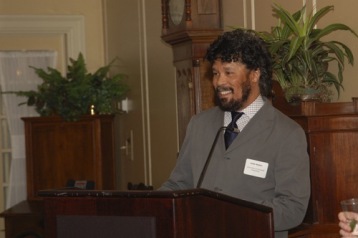
Keith L. Walker. “En voie d’émancipations: Rimbaud et le plaisir”,Rimbaud en 1870, in Parade sauvage, n°31, Paris, Fall 2020. (Forthcoming)

Book: The Forgotten Goddess: Humanism and Absolutism in Honoré d’Urfé’s L’Astrée. Geneva: Droz, 2000.

Ariosto and the Arabs: Contexts for the 'Orlando furioso' (co-editor with Mario Casari and Monica Preti), Officina Libraria and I Tatti–The Harvard University Center for Italian Renaissance Studies, forthcoming; including my essay "Trobar, Cantar, Recitar–Performative Poetics across the Middle Sea," pp. 427-454